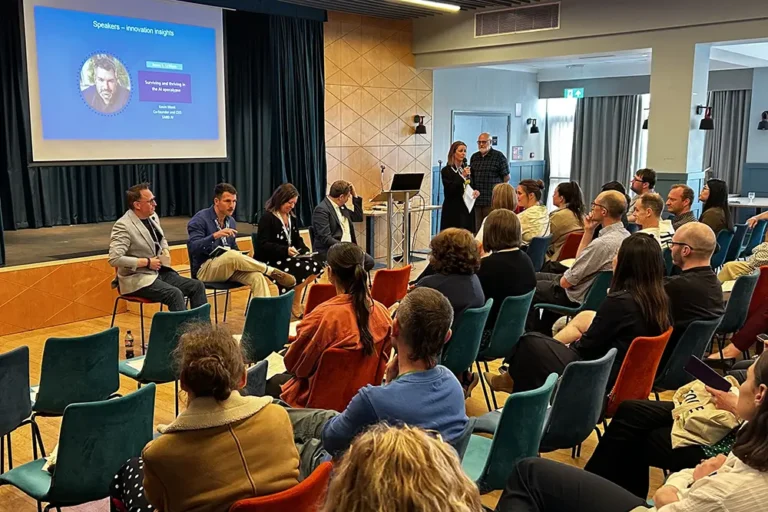
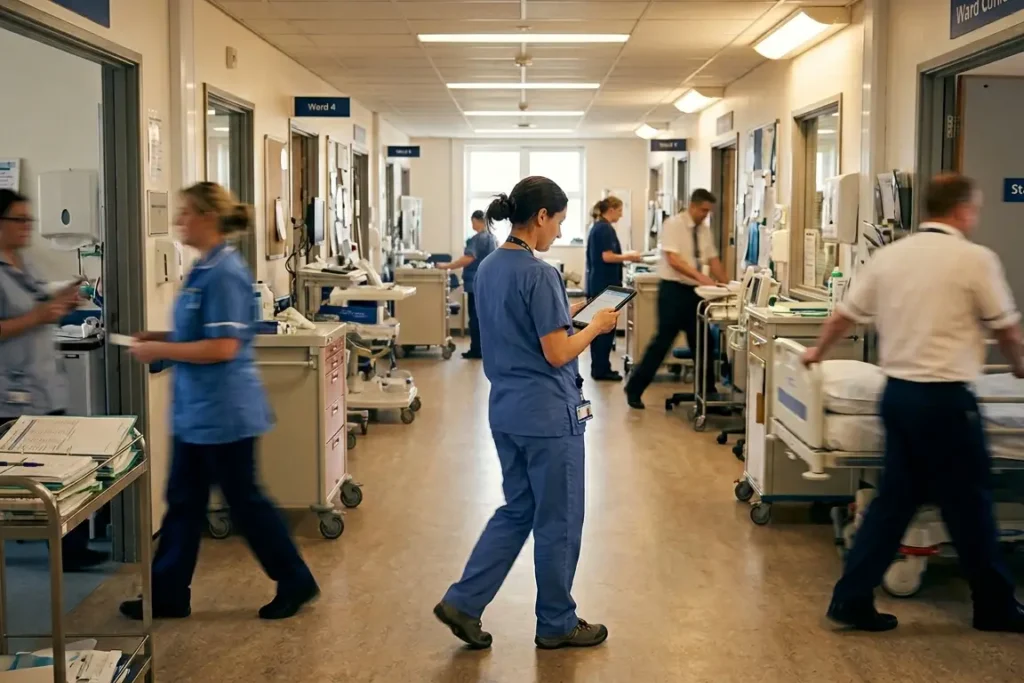
With the frontline digitisation programme winding up, the Highland advisory board met to discuss what it achieved, what its successor, frontline productivity should be focusing on, and the implications for trusts and suppliers.
NHS England launched the frontline digitisation programme in 2021. The programme had three, key aims of which the first was to “level up” providers so that by March 2025 (revised to March 2026) every trust would have an electronic patient record (or be in the process of implementing one).
Linked to this, the programme wanted to get 70% of trusts up to the “core level” of digitisation set out in the What Good Looks Like framework. And, more controversially, it wanted to “converge” trust EPRs and wider system infrastructure.
In April, with the deadline just behind it, the Highland advisory board met to discuss what frontline digitisation achieved, where this leaves trusts, and what its successor, frontline productivity, should be focusing on.
Frontline digitisation: positives
Andy Kinnear, a consultant and former NHS chief information officer, said there were positives to frontline digitisation, of which the first was that it happened. “NHS England got money out of the Treasury to invest in digital – and, given the scepticism in Whitehall about the NHS’ ability to use money effectively, it should be commended for that.”
Also, it looks as if the programme met its key target and put the NHS within sight of its 30-year ambition for every trust to have an EPR. In February last year, the Health Service Journal reported that seven trusts would miss the revised deadline.
But of these trusts, two are implementing and four have picked suppliers, leaving just one to go. Hence Andy Kinnear’s second positive: “The truth is that some places that did not have EPRs, or did not have good EPRs, have now got them.”
When it comes to the EPRs that trusts have picked, there have been some clear trends. Just a handful of hospitals still have in-house systems and ‘best of breed’ approaches are declining rapidly. Most trusts have gone with a single supplier.
When it comes to the suppliers that trusts have chosen, there have also been some clear trends. Trusts have been dropping Lorenzo, the EPR developed for the National Programme for IT in the NHS by iSoft/CSC/DXC Technology.
But other suppliers that entered the market in the NPfIT era, or just after it, such as Oracle Health/Cerner, System C, Meditech, and Allscripts/Altera Digital Health, initially expanded or at least consolidated their position. More recently, however, the majority of contracts have gone to US giant Epic or UK entrant Nervecentre.
In part, that’s because convergence has picked up as the programme has gone on. Thanks to frontline digitisation, Epic is not just embedded in London and England’s bigger trusts but is working across Somerset and Dorset (digitalhealth.net). Nervecentre is dominant in the East Midlands and has just been confirmed as the EPR supplier for Liverpool.
Andy Kinnear argued this trend would continue as more trusts form hospital groups or go out to tender for “second generation” systems. “We are seeing a consolidation of systems, and that is good, because areas that should always have been working together, are working together, and that should release efficiencies.”
Unfinished business
There are some caveats, though. Cindy Feddell, a former trust CIO who now works in Canada, noted that despite these trends, there are trusts that haven’t ended up with a market-leader, or secured money for “next generation” systems.
“They have met the metric of ‘we have a supplier’ but are they getting a good product or implementation?” she asked. “It may look like we have reduced the digital divide, but in quality terms, we could have made it worse, but more hidden.”
The implementation point has been exercising NHS England chief executive Sir James Mackey, who told a recent event that the NHS’ record is “really poor.” In fact, so many go-lives have been so disruptive to trust activity and reporting that Sir Jim has been signing off on them, personally.
And that’s not the only evidence that EPRs haven’t always lived up to their billing. A recent Health Foundation survey of 1,725 staff found a third felt their EPRs were not working well, and half thought they had made their work more, not less, difficult (HSJ).
“Frontline digitisation has got systems in place, but there is a big difference between having a system in place and having it used,” said advisory board chair Jeremy Nettle. “That gap is much greater than is generally acknowledged, and we need to address it.”
Frontline productivity: stated aims
NHS England has recognised that more will need to be done to make the most of the huge investment in EPRs. In an assessment of frontline digitisation published in March, it says its second ambition, to get 70% of trusts up to “core digitisation” is on track.
But more “financial and policy-based support” will be needed to turn this into “effective capability” that can drive productivity and support the three “shifts” set out in the 10 Year Health Plan. It identifies a particular need for investment in hosting, networks, and end-user devices.
Some of this will be addressed by a new programme, frontline productivity. NHS England has indicated this will have four pillars: legacy modernisation; productivity enhancement; sustainable digital change capability; and risk reduction or strengthening cyber security and operational resilience.
To support these aims, NHS England says it will: create a single, co-ordinated portfolio of digital products; run benchmarking, support and training offers; and manage a four-year, £2.5 billion funding envelope agreed with the Treasury.
Who sets the agenda, who gets the money?
As with so many NHS IT programmes, the question now is who will get to decide what products to develop and how to distribute the money. NHS England’s director of digital transformation, Dermot Ryan, has said there will be less central control over frontline productivity than previous programmes (digitalhealth.net).
But CIOs have heard that before. Andy Kinnear said that over the course of his career he has seen NHS Connecting for Health give way to the Health and Social Care Information Centre, then NHS Digital, NHSX, and NHS England Digital; but there has always been a strong thread of central control.
He argued that as NHS England is abolished and merged into the Department of Health and Social Care, there may be an opportunity for funding decisions to be devolved to regional directors of IT or trust CIOs. Right now, though, the reorganisation is bogged down in cuts and job losses.
The advisory board also debated whether there are enough digital leaders with a focus on transformation and patient experience to make this kind of devolution work. And Cindy Fedell noted that NHS IT has failed to develop the kind of standards-setting and accreditation bodies that guide R&D and funding decisions in other industries.
In pharma, or medical equipment, standards and regulation put guardrails around local decision making. In IT, there are few benchmarks, even for big systems like EPRs, and it has become normal for new areas of digital development to be described as “the wild west” as suppliers pile in; all of which makes purchasing harder and implementations more variable.
A new era, or a new central programme?
NHS England hasn’t shown much interest in standards or supplier regulation recently, but it has commissioned research into trust digital maturity and staff experience. Andy Kinnear argued frontline productivity should build on this, by focusing on tech that “makes clinicians’ lives better.”
Jason Broch, a practising GP, went further. He suggested the best thing the NHS could do right now would be to forget about tech for a bit. Instead, he suggested, it should “hire a barrage of observation and process experts” to “follow people around and find out what they actually do” and how patients really navigate the system.
Then, it could work out where technology could make a real difference. Unfortunately, politics and constrained resources mean this is unlikely to happen. Entrepreneur Ravi Kumar pointed out that: “If you look at what is being said by the secretary of state for health, and the people at the centre, it is all about productivity improvement and delivering 2% a year for the next three-years.
“Everything is driven by that and by the idea that there are a few tools for getting there. There’s the Federated Data Platform, and AI, and the development of the NHS App, which is really being driven by the centre, even where other solutions exist. And, really, those are the priorities.”
Summing up, Jeremy Nettle said: “Frontline digitisation has got systems in place, and the challenge for frontline productivity is to realise the benefits of them.” There’s an opportunity to do this over the next three years. There’s also a danger that frontline productivity could become yet another NHS IT programme focused on the roll-out of a small suite of expensive, centrally mandated technologies.
Jason Broch argued that would be a disappointing outcome. “The assumptions behind that kind of thinking are not right,” he said. “If your procedures are rubbish, then adding tools to make them a bit more efficient does not help. Just doing bad things a bit less badly does not mean you are creating value.”